A gamified platform where communities imagine technology's social futures through micro-storytelling.
Traditional forecasting stays locked in corporate strategy rooms, while social media reacts to current events but provides no structured way to imagine "what if" scenarios collaboratively.
We need tools that democratize future-thinking and harness collective human imagination before technologies arrive, not after.
Design Goal: Create a low barrier platform that makes speculative thinking as engaging as Wordle, while generating actionable foresight like prediction markets.
Cognitive design principles, 15+ competitive analyses, and trends in short form fiction writing informed the product strategy.
Combining familiar elements (café setting) with unfamiliar technology (neural interfaces) creates a 'cognitive itch', the sweet spot between comfort and curiosity that drives sustained engagement.
Research suggests abundance breeds indecision, and constraints force focus and drive innovation.
Harvard Business Review: Why Constraints are Good for Innovation
Apps built around regular rituals (Duolingo, Wordle) create different engagement patterns than always-available content. Twice-weekly cadence aims to balance anticipation with sustainability.
Users encounter a tech-grounded scenario each week, write 150 character endings, and vote on likelihood, transforming individual creativity into collective intelligence.
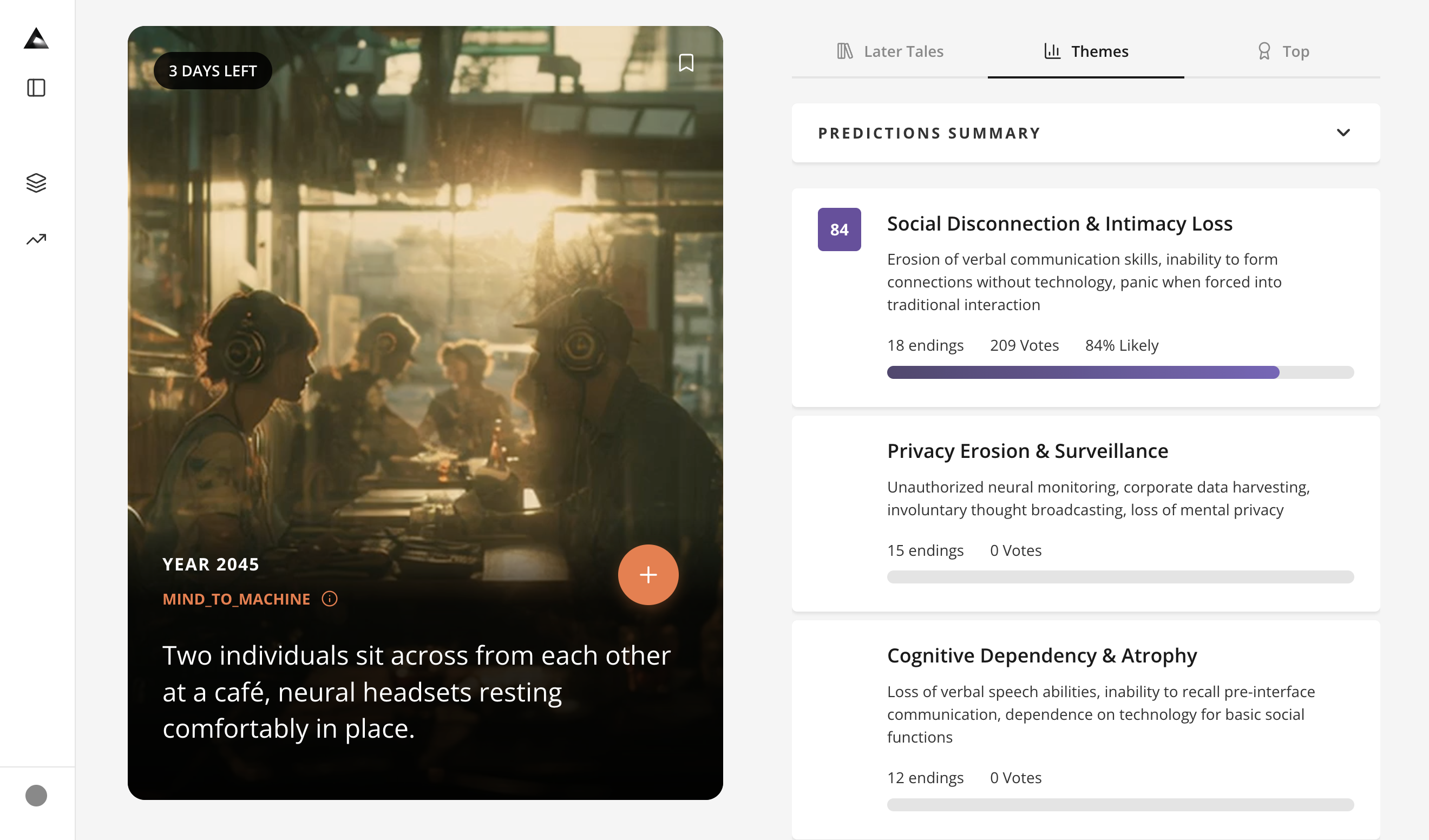
Every tale pairs one emerging technology (neural interfaces, genetic editing, AR overlays) with one grounded scenario (café meetup, job interview, first date).
Familiar enough to relate to, speculative enough to spark imagination.
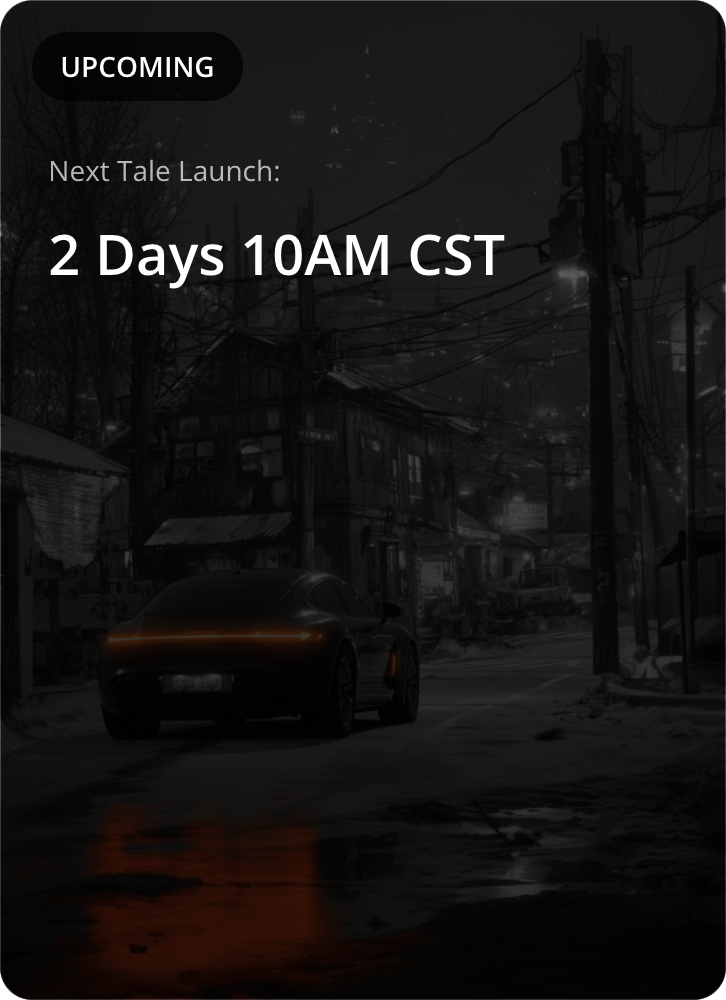
Twice Weekly
Monday & Thursday 10AM
3-Day Window
Submit & vote before close
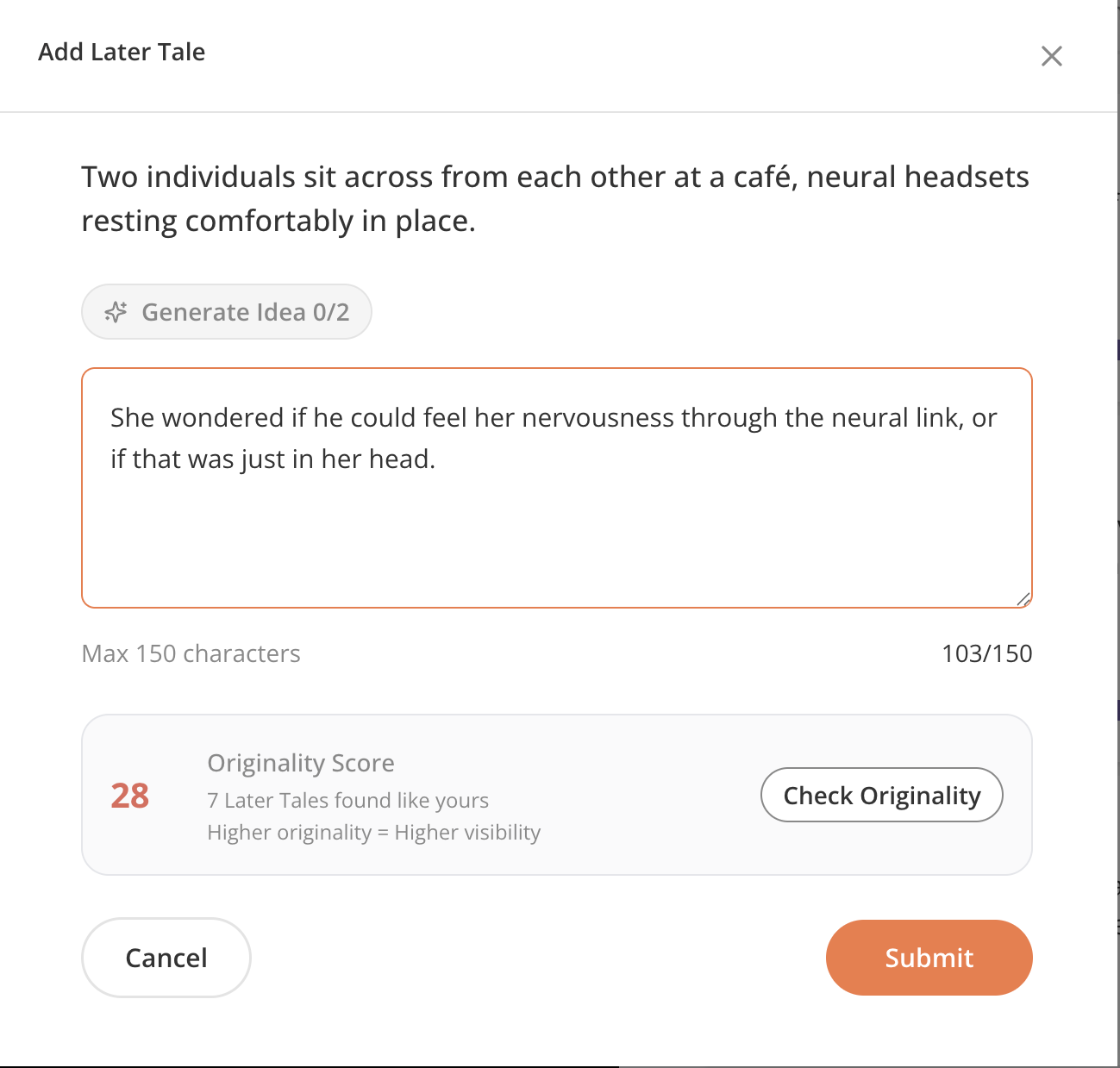
150 characters maximum, just enough to end a complete micro-story and distill ideas to their essence. The "Generate Idea" function offers a random starting point for writers who are stuck or beginners, for optional guidance that doesn't control.
An AI-powered Originality Score provides instant feedback on uniqueness versus crowd patterns.
Higher Originality = Higher Visibility
Unique stories surface more in voting, creating incentive for creative risk-taking.
Binary voting (Likely/Unlikely) keeps decisions fast while randomized story exposure prevents groupthink.
Stories appear in randomized order for each voter, ensuring diverse narratives get equal visibility regardless of submission time or early vote counts.
After voting closes, AI analyzes all submissions to surface recurring themes, concerns, and narrative patterns—revealing collective anxieties and hopes.
Example Theme Clusters:
Browse tales, read scenarios, vote, submit endings, and explore themed results.
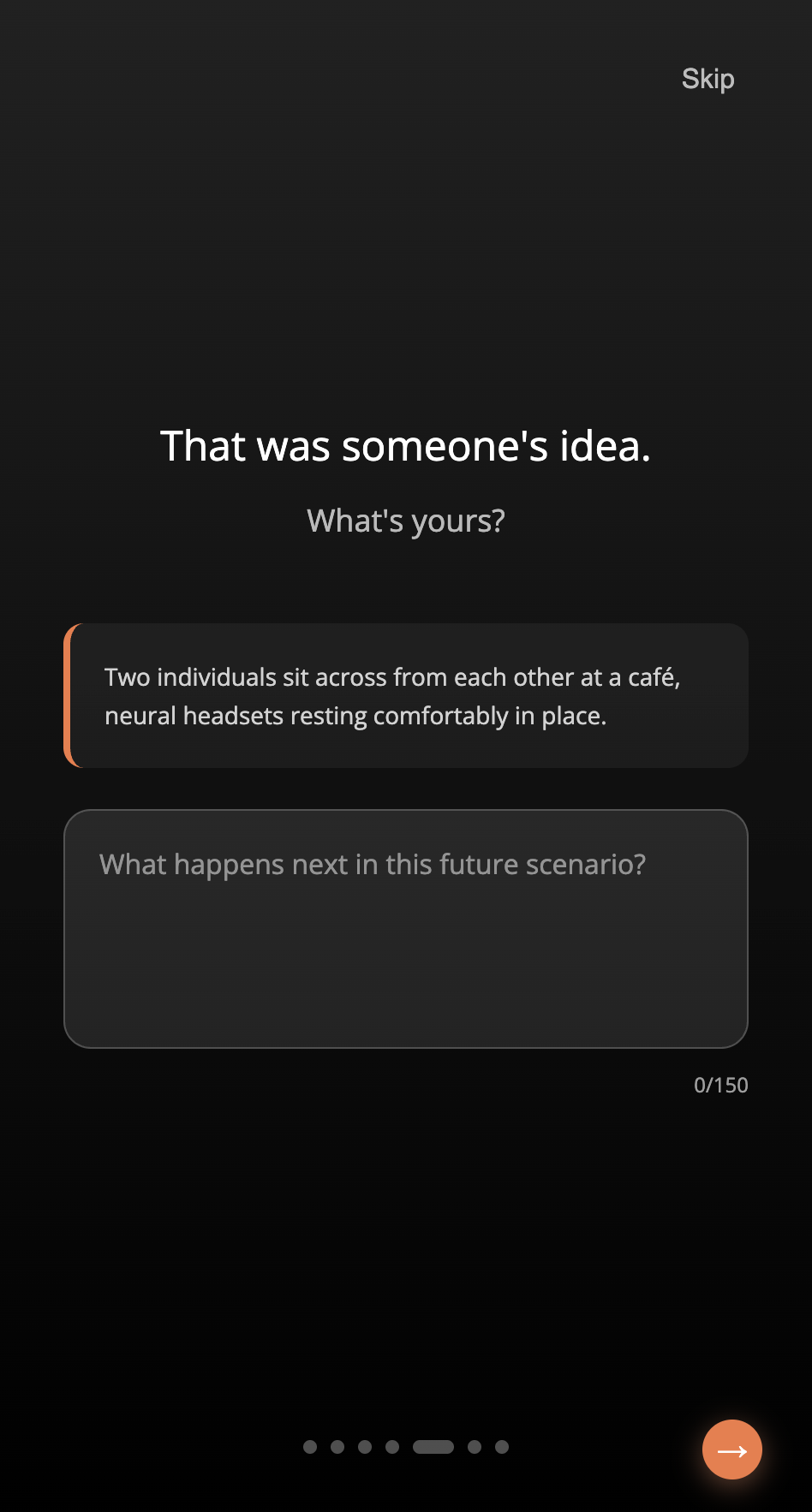
Frictionless introduction to concept, mechanics, and first contribution.
Leveraging AI tools strategically at each stage from research synthesis to prototype.
Validation first approach: proving demand before building at scale
Your imagination could influence how we collectively predict the future.
Join the Beta Waitlist